JONG AND SYMBOLISM
A jong is small. Rarely longer than an arm. But it's been carrying more than wind for a very long time.
Go back far enough and you find simple boats woven from palm leaf or pandanus, set adrift with offerings for the spirits — a practice from a more animist world, long before anyone raced them for sport. Around these same waters, seafaring skill grew into something larger: trade routes, island empires, a whole way of life shaped by wind and tide. Somewhere along the way, that memory faded from most people's daily lives. It didn't disappear. It just went quiet.
We've spent years trying to make it loud again — not by lecturing anyone about heritage, but by putting the jong somewhere people couldn't ignore it.
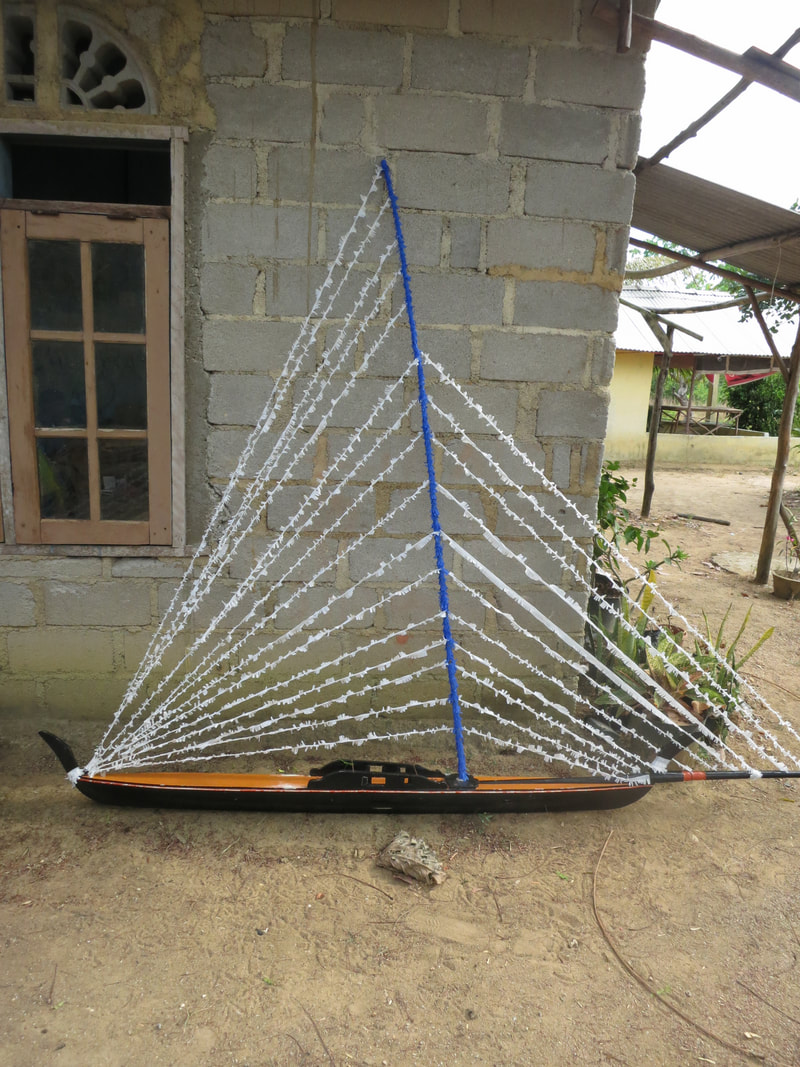
Zakir started it, in a way, without meaning to make a statement at all. He built a float for a local carnival — a jong, decorated and mounted on the back of a motorcycle, paraded through the streets. It got a reaction nobody expected. At the time, Indonesia's maritime past wasn't something the elite paid much attention to. So we kept going: parades, political meetings, documentaries, YouTube videos — putting the racing jong wherever it might catch someone's eye, online and off. It worked better than we hoped. Sani, the region's then-governor, backed it, funding races in Batam. The blueprint was there; people just needed to see it again.
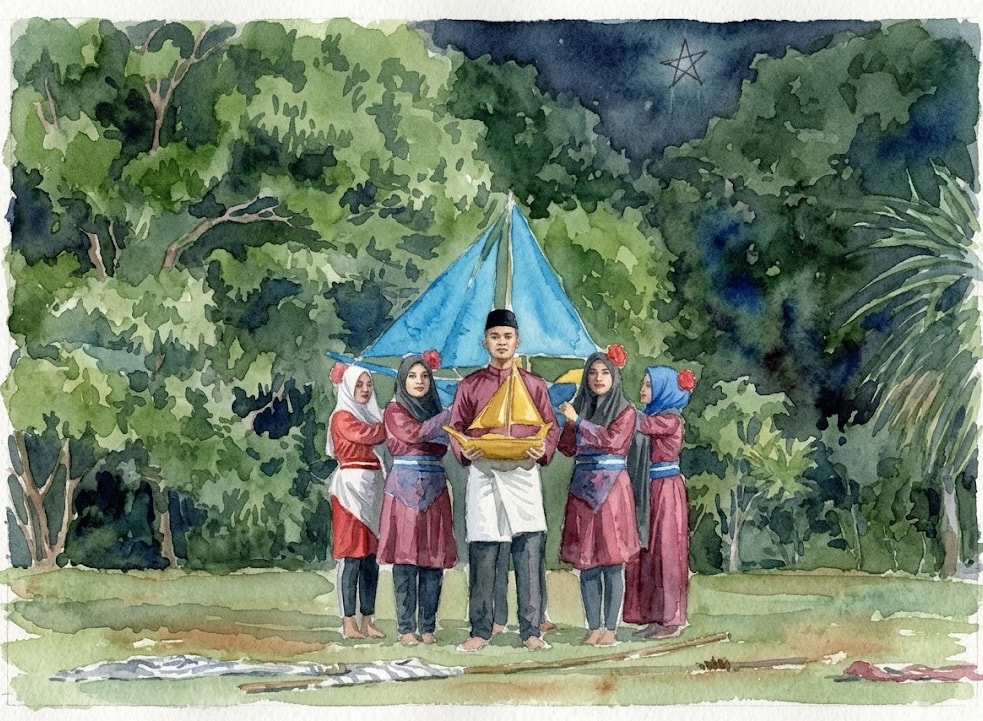
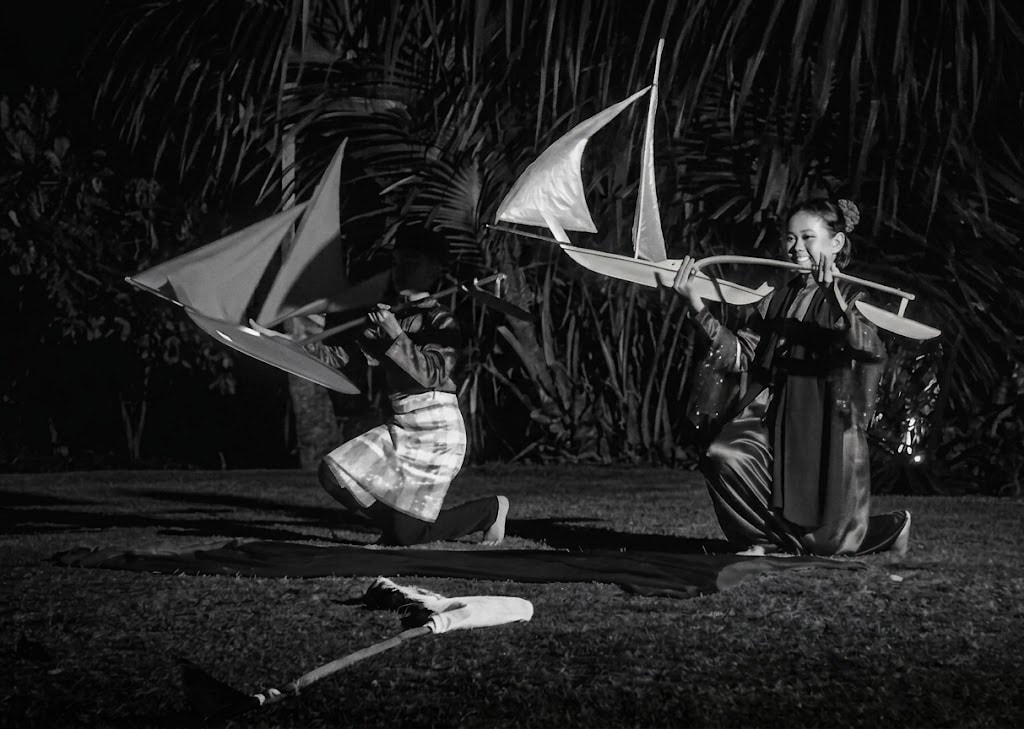
More recently, the jong found its way into dance. We commissioned a Malay piece built entirely around it — choreographed with a child at the center, moving through the motions of the boat itself: the tilt of the hull, the fill of the sail, the run before the wind. Performed on the sand at race time, it turned something people usually only watch from the water's edge into something a body could tell. The jong stopped being only a thing to build and race, and became a shape to dance, too.
None of this is really about nostalgia. It's closer to a reminder — that this coastline has always been a maritime place, that the wind and the water shaped how people here lived long before anyone wrote it down, and that a small wooden boat, raced by a kid on a Tuesday afternoon, is still part of that same story. We're not trying to preserve something behind glass. We're trying to keep it in people's hands.
Go back far enough and you find simple boats woven from palm leaf or pandanus, set adrift with offerings for the spirits — a practice from a more animist world, long before anyone raced them for sport. Around these same waters, seafaring skill grew into something larger: trade routes, island empires, a whole way of life shaped by wind and tide. Somewhere along the way, that memory faded from most people's daily lives. It didn't disappear. It just went quiet.
We've spent years trying to make it loud again — not by lecturing anyone about heritage, but by putting the jong somewhere people couldn't ignore it.
Zakir started it, in a way, without meaning to make a statement at all. He built a float for a local carnival — a jong, decorated and mounted on the back of a motorcycle, paraded through the streets. It got a reaction nobody expected. At the time, Indonesia's maritime past wasn't something the elite paid much attention to. So we kept going: parades, political meetings, documentaries, YouTube videos — putting the racing jong wherever it might catch someone's eye, online and off. It worked better than we hoped. Sani, the region's then-governor, backed it, funding races in Batam. The blueprint was there; people just needed to see it again.
More recently, the jong found its way into dance. We commissioned a Malay piece built entirely around it — choreographed with a child at the center, moving through the motions of the boat itself: the tilt of the hull, the fill of the sail, the run before the wind. Performed on the sand at race time, it turned something people usually only watch from the water's edge into something a body could tell. The jong stopped being only a thing to build and race, and became a shape to dance, too.
None of this is really about nostalgia. It's closer to a reminder — that this coastline has always been a maritime place, that the wind and the water shaped how people here lived long before anyone wrote it down, and that a small wooden boat, raced by a kid on a Tuesday afternoon, is still part of that same story. We're not trying to preserve something behind glass. We're trying to keep it in people's hands.